

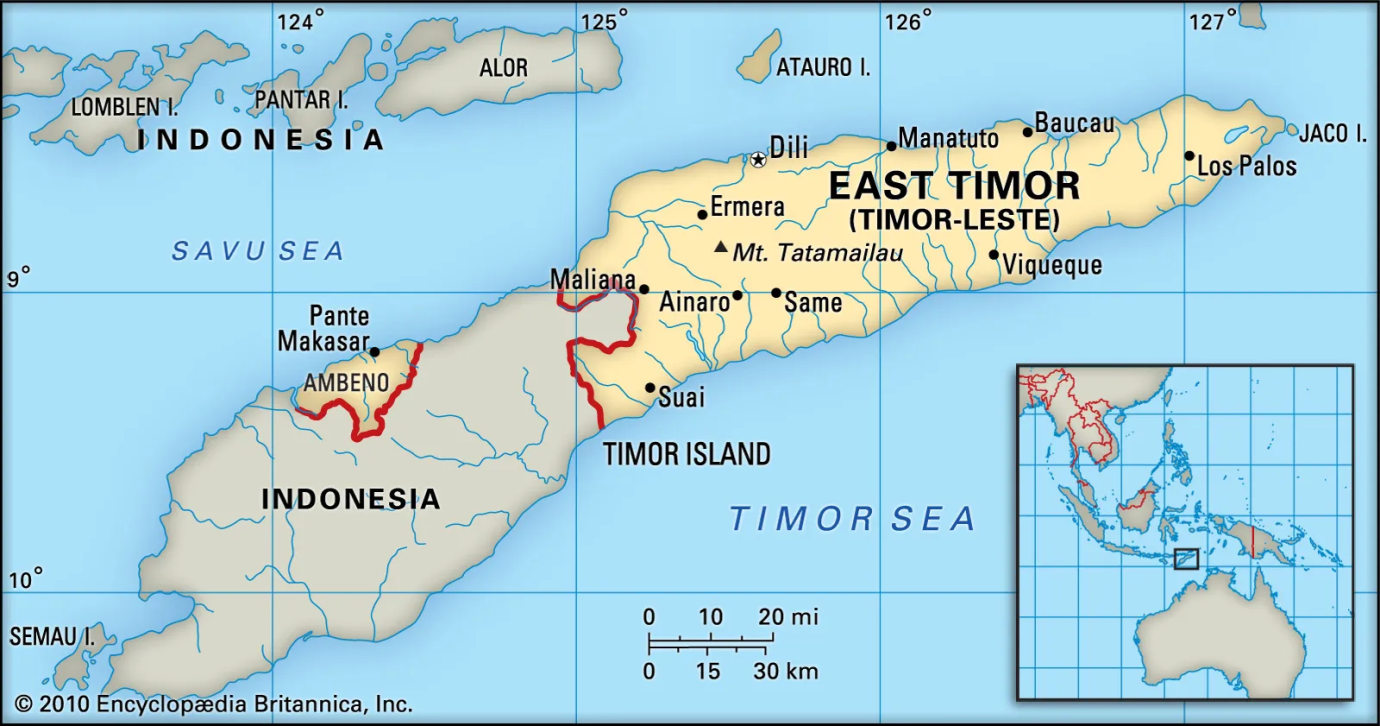
East Timor plans to start construction of a 72 MW solar PV plant, together with a 36-MW battery energy storage system in 2026 of its first large solar-power plant. The project will be built in the municipality of Manatuto.
The solar plant and storage system will be developed jointly by Itochu Corp of Japan and Électricité de France (EDF) of France. Power generated will be supplied to the national utility Electricidade de Timor-Leste (EDTL) under a 25-year agreement.
East Timor Climate
East Timor (Timor-Leste) has a world-class solar resource due to its tropical climate, receiving a high amount of sun throughout the year. This makes it an ideal location for solar energy development.
State of electricity & energy demand in East Timor
East Timor has already electrified over 90% of its households, with plans to complete full household electrification by next year i.e. shortly after the solar project begins. The country’s peak electricity demand is about 100 MW, which is roughly a third of its total installed generation capacity of ~300 MW. Given modest demand and relatively small population (around 1.4 million people), a 72 MW solar plant will make a meaningful difference to the electricity mix and reliability.
Significance for East Timor
Currently, almost all of East Timor’s electricity comes from diesel-powered plants. But by shifting to solar with storage, the country aims to slash expensive diesel imports, thereby reducing its fiscal burden and lowering energy costs. According to EDTL’s chair Marito Ferreira, solar electricity will be “much cheaper than diesel-fired output.”
The solar-plus-storage project is part of East Timor’s plan to gradually retire its diesel power plants ‘in the near-to-medium term’. The country aims for a broader shift: from diesel → possibly natural gas–fired power plants → and further investments in renewables.
East Timor has set a target of net-zero emissions by 2050, and this solar project is a first concrete step towards transforming its energy infrastructure. Beyond this project, there’s additional optimism around renewables: a company named Mooreast Holdings Ltd. recently announced feasibility studies to develop up to 500 MW of renewable energy projects in Timor-Leste over the next 5–10 years, including floating solar, wind, hydro, tidal and wave energy.
Benefits
The project aims for cheaper electricity compared to diesel-based generation → reduces energy costs for households and government budget burden. It also implies more stable energy supply, especially as battery storage helps manage supply when solar isn’t generating, like during night or cloudy weather.
The plant will showcase progress on commitment to net-zero emissions by 2050, and improving sustainability & resilience. It will also be a potential stimulus for further renewable investments (wind, floating solar, etc.) especially if the 500 MW+ plan materializes.
Potential Challenges / Risks
The project has some potential risks and challenges like
- Implementation & execution risk: building and commissioning the plant + storage system on schedule (beginning 2026, operational a few months later), where delays are always possible.
- Integrating solar & storage into national grid requires upgrades in grid management, storage operation, and stable demand-supply balancing.
- Demand growth: as the country pursues mining (gold, natural gas) and other development, energy demand may rise substantially and a 72 MW may not suffice in the long run; where additional capacity is needed. Indeed, new renewable initiatives (like Mooreast’s plans) would need to scale up fast.
