

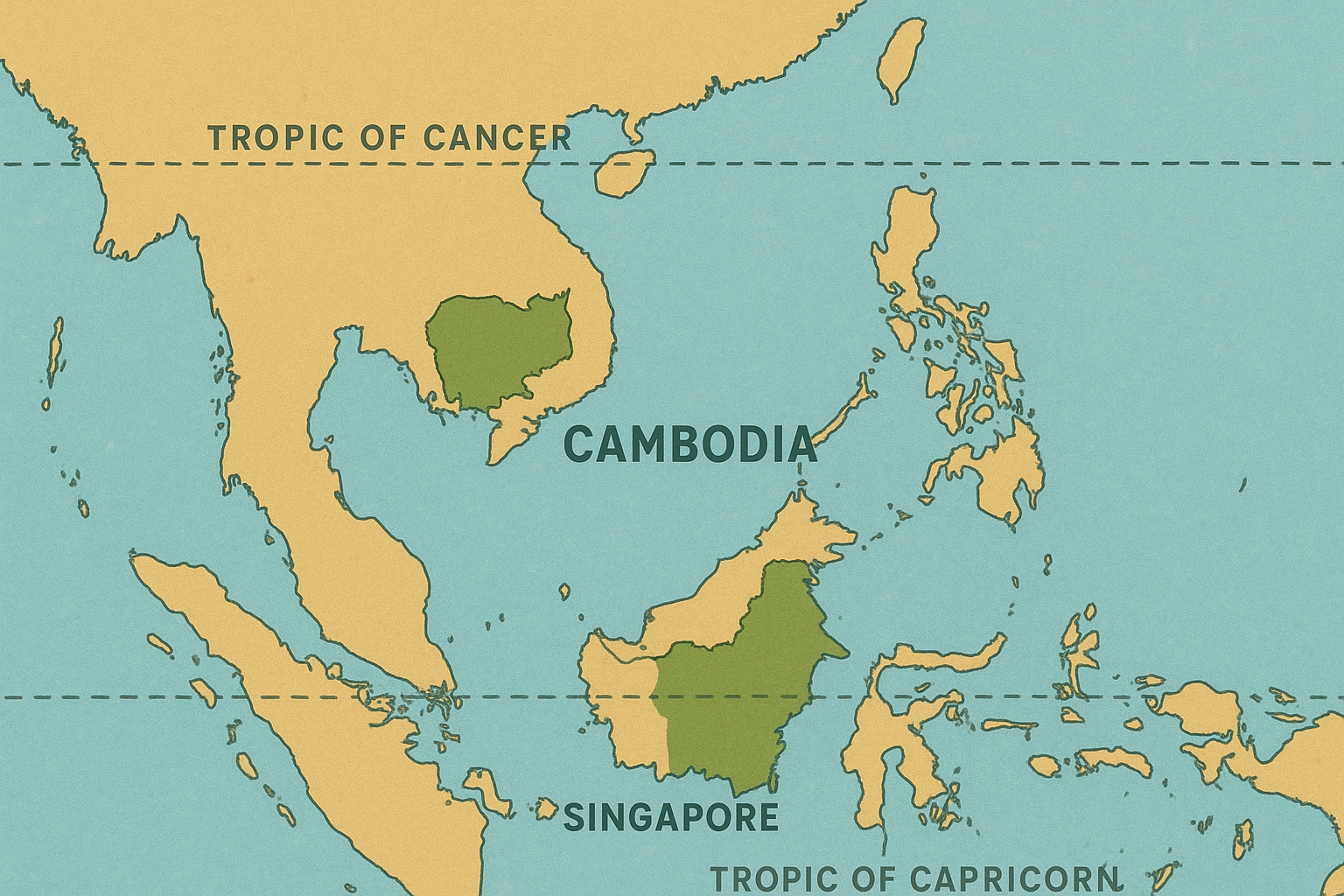
The EMA (Energy Market Authority) says Singapore plans to import 1 (GW) of low-carbon electricity from Cambodia. Most of Cambodia’s clean energy comes from solar farms and hydropower. This cross-border deal is being regarded as a “key building block” for the APG (ASEAN Power Grid), helping diversify away from fossil fuels and strengthening regional renewable-energy cooperation.
“The APG will strengthen our region’s energy security, renewable energy development, and economic growth, while diversifying energy sources away from fossil fuels.” according to the spokesperson of EMA Singapore.
According to other recent reporting, the shift of Cambodia’s energy mix has already resulted in “clean energy” making up 62 % of the national grid — putting Cambodia among the highest in ASEAN.
Some facts about Cambodia’s Solar Energy
Cambodia’s installed solar capacity is ~ 432 MW (megawatts) as of recent years, shows solar is still a small — but growing — part of the grid. The expected solar capacity growth is expected to more than double to ~ 1 GW by 2030, which indicates significant upcoming expansion and supports feasibility of exports. Cambodia is expected to build ~ 3.2 GW solar capacity by 2040 which could generate more clean electricity than it needs, allowing it to export the surplus to other countries. The International Energy Agency estimates that the region has more than 20 terawatts of solar and wind potential which would help electricity trade through the ASEAN power grid. Thailand clean energy is already 62% of its national grid.
Singapore has very limited land not enough space for large solar farms and has a goal to import up to 4 GW of low-carbon electricity by 2035. So, it needs clean energy from neighbours.
Hence, the APG is a long-term plan to connect all ASEAN power networks so electricity can move freely between countries — improving energy security, reliability, decarbonization, and regional cooperation. Cambodia could emerge as a green-power exporter; small countries like Singapore get clean energy; region benefits.
Examples of Solar Projects in Cambodia
Cambodia’s solar pipeline is expanding, led by the Kampong Chhnang National Solar Park, which is advancing toward 100 MW after completing a 60 MW first phase and preparing a 40 MW second phase. An 80 MW project in Prey Veng approved in 2023 is progressing under the country’s broader renewable-energy plans. Pursat and Svay Rieng provinces are also moving ahead with large installations of 150 MW and 60 MW, respectively, both approved in 2023. In addition, a 125 MW project in Kampong Thom—located about 180 km from Phnom Penh—is scheduled for commissioning in Q3 2026 and could be expanded to roughly 200 MW.
