

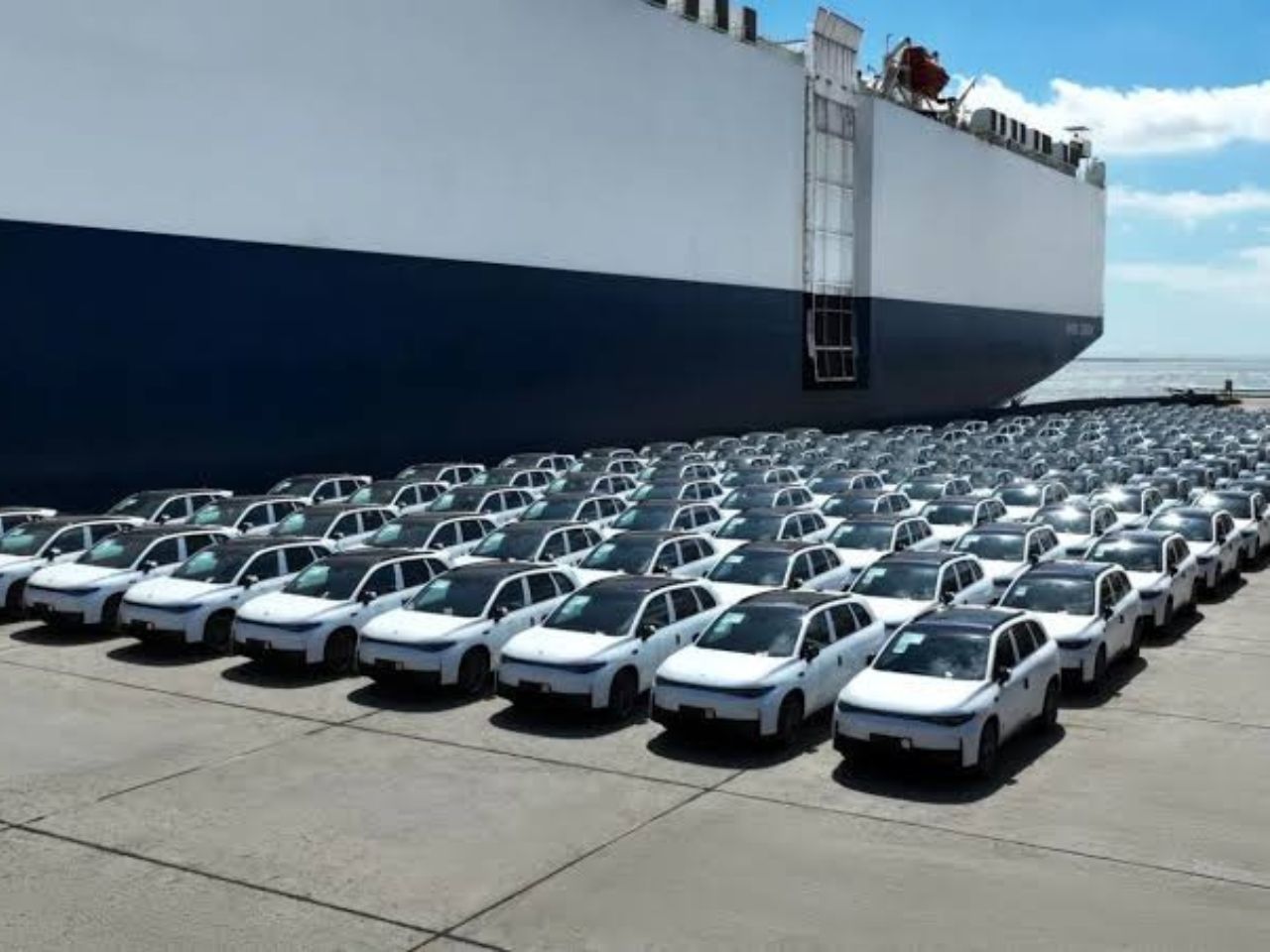
China’s electric vehicle (EV) exports climbed to a record value of $9.2 billion in May 2026, marking a 49 percent increase compared to the same month last year, according to new data released by global energy think tank Ember. The figure surpassed the previous monthly record of $9.1 billion set in April 2026, highlighting the continued expansion of China’s influence in the global EV market.
The latest data underscores China’s growing dominance in electric vehicle manufacturing and exports, with overseas demand continuing to rise across both developed and emerging markets.
Record Vehicle Shipments Drive Export Growth
China exported approximately 448,000 electric passenger vehicles during May, including around 279,000 battery electric vehicles (BEVs) and 169,000 plug-in hybrid electric vehicles (PHEVs).
The rapid growth has transformed EVs into one of China’s most important clean technology export categories. Monthly EV exports, which were valued at less than $1 billion in 2020, are now approaching the scale of lithium-ion battery exports, traditionally one of the country’s strongest cleantech export segments.
The latest milestone reflects both increasing global EV adoption and China’s ability to supply vehicles at scale through its extensive manufacturing ecosystem.
Southeast Asia Leads Demand Surge
Southeast Asia emerged as one of the strongest growth regions for Chinese Electric Vehicle exports in May. Exports to ASEAN countries reached an all-time high of $1.2 billion as governments across the region accelerated efforts to electrify transportation and reduce dependence on imported fossil fuels.
Thailand led the growth, importing a record 36,000-plus Chinese electric vehicles during the month. The Philippines also recorded strong demand, with imports exceeding 33,000 units.
The region is increasingly becoming a major destination for Chinese automakers as consumers, businesses and policymakers embrace electric mobility solutions.
Policy Support Boosts Emerging Markets
Several smaller Southeast Asian markets also recorded record import volumes, supported by favourable government policies, expanding charging infrastructure and local assembly initiatives.
Cambodia has emerged as one of the fastest-growing EV markets in the region after reducing customs duties on battery electric vehicles to zero and lowering tariffs on plug-in hybrids to 7 percent from 35 percent in March. Battery electric vehicles currently dominate sales, although plug-in hybrids are gaining traction.
In Lao PDR, authorities have introduced a series of measures to encourage EV adoption, including lower registration and service fees. The government has also mandated that transport operators ensure electric vehicles account for at least 10 percent of their fleets by the end of 2026.
Additionally, the country temporarily suspended imports of petrol-powered cars until the end of the year in an effort to reduce fuel import dependence. The impact of this measure is expected to become more visible in the coming months.
Energy Security Concerns Accelerate Electrification
According to Ember, recent volatility in global fuel markets has further strengthened the case for transport electrification across Southeast Asia.
Lam Pham, Energy Analyst for Asia at Ember, said disruptions in global fuel markets linked to the conflict in the Middle East have contributed to faster EV adoption across ASEAN countries.
“The current energy crisis has reinforced the value of electrification as a pathway to greater energy security, reduced fuel import exposure, and long-term transport cost savings,” Pham said.
China Strengthens Position in Regional EV Transition
The record export performance reflects a broader trend of accelerating vehicle electrification across Asia, with Southeast Asia increasingly playing a central role in the transition.
Euan Graham, Senior Electricity and Data Analyst (Global) at Ember, said China’s ability to meet growing regional demand continues to drive export growth.
“China’s electric vehicle exports continue to break records, and the surge in shipments to ASEAN markets is especially striking,” Graham said. “Southeast Asia is fast becoming one of the most dynamic destinations for electric vehicles, and China is supplying that demand at scale and speed.”
As governments across the region introduce supportive policies and invest in charging infrastructure, Chinese manufacturers appear well positioned to benefit from the next phase of Asia’s electric mobility expansion.
